
LEARNING CENTER
MUSACOIN LEARNING CENTER
Downloads, Tutorials, & Information
Trust Wallet App Download

Buy, store, collect NFTs, exchange & earn crypto.
Buy, store, collect NFTs, exchange & earn crypto.


Trust Wallet Tutorials
Quick Setup, Buying BNB, & Swapping to BNB Smart Chain on Trust Wallet
Trust Wallet Tutorial for Beginners: How to Use Trust Wallet App
BINANCE SMART CHAIN BLOCKCHAIN
BSC Information

Musacoin (MUSA Token) is powered by and was developed on the the Binance Smart Chain. The Binance Smart Chain is a blockchain run by the cryptocurrency exchange Binance. It is based on Ethereum, and shares most of the blockchain's features, such as smart contracts and support for a range of DeFi protocols. Binance Smart Chain was released in 2020 to complement Binance Chain which runs the Binance Decentralised Exchange (DEX). Binance Smart Chain runs in parallel to the Binance Chain. The otherwise centralised exchange, Binance, began its foray into decentralised finance with the launch of the Binance Chain in April 2019.
Binance Chain was designed to host the Binance DEX with high speed transactions. Unfortunately it was built without smart contract capabilities and so a new blockchain was needed to support DeFi applications.
To support a low-cost, high speed DeFi ecosystem, Binance launched the Binance Smart Chain (BSC) in September 2020.
BSC essentially merges the high throughput of the Binance Chain with smart contracts, allowing users to manage their digital assets cross-chain, including support for Ethereum. It provides an environment for creating dApps and other DeFi products. It features a three-second block time, cross-chain asset transfers, Ethereum Virtual Machine (EVM) compatibility and a Proof-of-Stake consensus protocol.
The implementation of EVM allows it to run Ethereum-based applications like MetaMask. It is worth noting that BSC does not operate as a layer-2 protocol for Binance Chain and is an independent blockchain that could run even if Binance Chain went offline. Essentially, BSC is like a modified Ethereum fork.
Since it runs in parallel to Binance Chain (BC), it utilises a dual-chain architecture, whereby users can transfer their digital assets from one chain to the other without any hassle by using Binance Bridge.
To support a low-cost, high speed DeFi ecosystem, Binance launched the Binance Smart Chain (BSC) in September 2020.
BSC essentially merges the high throughput of the Binance Chain with smart contracts, allowing users to manage their digital assets cross-chain, including support for Ethereum. It provides an environment for creating dApps and other DeFi products. It features a three-second block time, cross-chain asset transfers, Ethereum Virtual Machine (EVM) compatibility and a Proof-of-Stake consensus protocol.
The implementation of EVM allows it to run Ethereum-based applications like MetaMask. It is worth noting that BSC does not operate as a layer-2 protocol for Binance Chain and is an independent blockchain that could run even if Binance Chain went offline. Essentially, BSC is like a modified Ethereum fork.
Since it runs in parallel to Binance Chain (BC), it utilises a dual-chain architecture, whereby users can transfer their digital assets from one chain to the other without any hassle by using Binance Bridge.
KING MUSA
The History of Mansa Musa (Musa I of Mali)
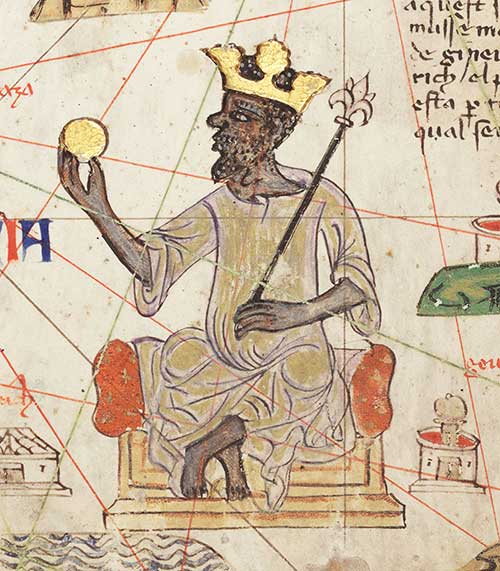
Mansa Musa (Musa I of Mali) was the ruler of the kingdom of Mali from 1312 C.E. to 1337 C.E. During his reign, Mali was one of the richest kingdoms of Africa, and Mansa Musa was among the richest individuals in the world. The ancient kingdom of Mali spread across parts of modern-day Mali, Senegal, the Gambia, Guinea, Niger, Nigeria, Chad, Mauritania, and Burkina Faso. Mansa Musa developed cities like Timbuktu and Gao into important cultural centers. He also brought architects from the Middle East and across Africa to design new buildings for his cities. Mansa Musa turned the kingdom of Mali into a sophisticated center of learning in the Islamic world.
Mansa Musa came to power in 1312 C.E., after the previous king, Abu Bakr II, disappeared at sea. Mansa Abu Bakr II had departed on a large fleet of ships to explore the Atlantic Ocean, and never returned. Mansa Musa inherited a kingdom that was already wealthy, but his work in expanding trade made Mali the wealthiest kingdom in Africa. His riches came from mining significant salt and gold deposits in the Mali kingdom. Elephant ivory was another major source of wealth.
When Mansa Musa went on a pilgrimage (hajj) to Mecca in 1324 C.E., his journey through Egypt caused quite a stir. The kingdom of Mali was relatively unknown outside of West Africa until this event. Arab writers from the time said that he travelled with an entourage of tens of thousands of people and dozens of camels, each carrying 136 kilograms (300 pounds) of gold. While in Cairo, Mansa Musa met with the Sultan of Egypt, and his caravan spent and gave away so much gold that the overall value of gold decreased in Egypt for the next 12 years. Stories of his fabulous wealth even reached Europe. The Catalan Atlas, created in 1375 C.E. by Spanish cartographers, shows West Africa dominated by a depiction of Mansa Musa sitting on a throne, holding a nugget of gold in one hand and a golden staff in the other. After the publication of this atlas, Mansa Musa became cemented in the global imagination as a figure of stupendous wealth.
After his return from Mecca, Mansa Musa began to revitalize cities in his kingdom. He built mosques and large public buildings in cities like Gao and, most famously, Timbuktu. Timbuktu became a major Islamic university center during the 14th century due to Mansa Musa’s developments. Mansa Musa brought architects and scholars from across the Islamic world into his kingdom, and the reputation of the Mali kingdom grew. The kingdom of Mali reached its greatest extent around the same time, a bustling, wealthy kingdom thanks to Mansa Musa’s expansion and administration.
Mansa Musa died in 1337 and was succeeded by his sons. His skillful administration left his empire well-off at the time of his death, but eventually, the empire fell apart. Well after his death, Mansa Musa remained engrained in the imagination of the world as a symbol of fabulous wealth. However, his riches are only one part of his legacy, and he is also remembered for his Islamic faith, promotion of scholarship, and patronage of culture in Mali.
Source: nationalgeographic.org - Mansa Musa
Mansa Musa came to power in 1312 C.E., after the previous king, Abu Bakr II, disappeared at sea. Mansa Abu Bakr II had departed on a large fleet of ships to explore the Atlantic Ocean, and never returned. Mansa Musa inherited a kingdom that was already wealthy, but his work in expanding trade made Mali the wealthiest kingdom in Africa. His riches came from mining significant salt and gold deposits in the Mali kingdom. Elephant ivory was another major source of wealth.
When Mansa Musa went on a pilgrimage (hajj) to Mecca in 1324 C.E., his journey through Egypt caused quite a stir. The kingdom of Mali was relatively unknown outside of West Africa until this event. Arab writers from the time said that he travelled with an entourage of tens of thousands of people and dozens of camels, each carrying 136 kilograms (300 pounds) of gold. While in Cairo, Mansa Musa met with the Sultan of Egypt, and his caravan spent and gave away so much gold that the overall value of gold decreased in Egypt for the next 12 years. Stories of his fabulous wealth even reached Europe. The Catalan Atlas, created in 1375 C.E. by Spanish cartographers, shows West Africa dominated by a depiction of Mansa Musa sitting on a throne, holding a nugget of gold in one hand and a golden staff in the other. After the publication of this atlas, Mansa Musa became cemented in the global imagination as a figure of stupendous wealth.
After his return from Mecca, Mansa Musa began to revitalize cities in his kingdom. He built mosques and large public buildings in cities like Gao and, most famously, Timbuktu. Timbuktu became a major Islamic university center during the 14th century due to Mansa Musa’s developments. Mansa Musa brought architects and scholars from across the Islamic world into his kingdom, and the reputation of the Mali kingdom grew. The kingdom of Mali reached its greatest extent around the same time, a bustling, wealthy kingdom thanks to Mansa Musa’s expansion and administration.
Mansa Musa died in 1337 and was succeeded by his sons. His skillful administration left his empire well-off at the time of his death, but eventually, the empire fell apart. Well after his death, Mansa Musa remained engrained in the imagination of the world as a symbol of fabulous wealth. However, his riches are only one part of his legacy, and he is also remembered for his Islamic faith, promotion of scholarship, and patronage of culture in Mali.
Source: nationalgeographic.org - Mansa Musa